
by Over Barahona | May 2026 | Ottawa Sign Guides | 10 min read
How a Cabinet Sign Gets Installed in Ottawa: What Business Owners Should Know (2026)
You have decided your business needs a cabinet sign. You have a location in mind, a logo, and a rough idea of what you want. Then you start asking around — and suddenly you are hearing words like “permit application,” “ESA certification,” and “EIFS anchors.”
What does any of that mean? And more importantly — what should you, as a business owner, actually understand about the installation process before you sign a contract with a sign company?
This guide answers exactly that. Not a technical manual — but a clear, honest explanation of what happens between the day you approve a design and the day your sign turns on for the first time. Knowing this process helps you ask the right questions, avoid costly mistakes, and choose a sign company that does things properly.
What Is a Cabinet Sign? (And Is It Right for Your Business?)
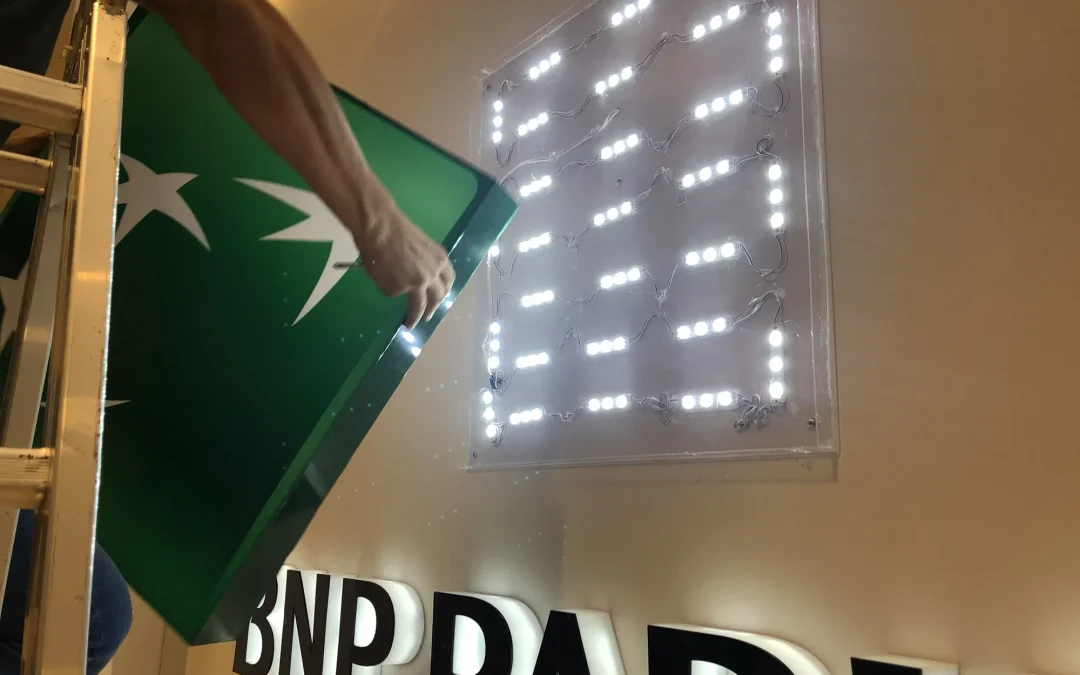
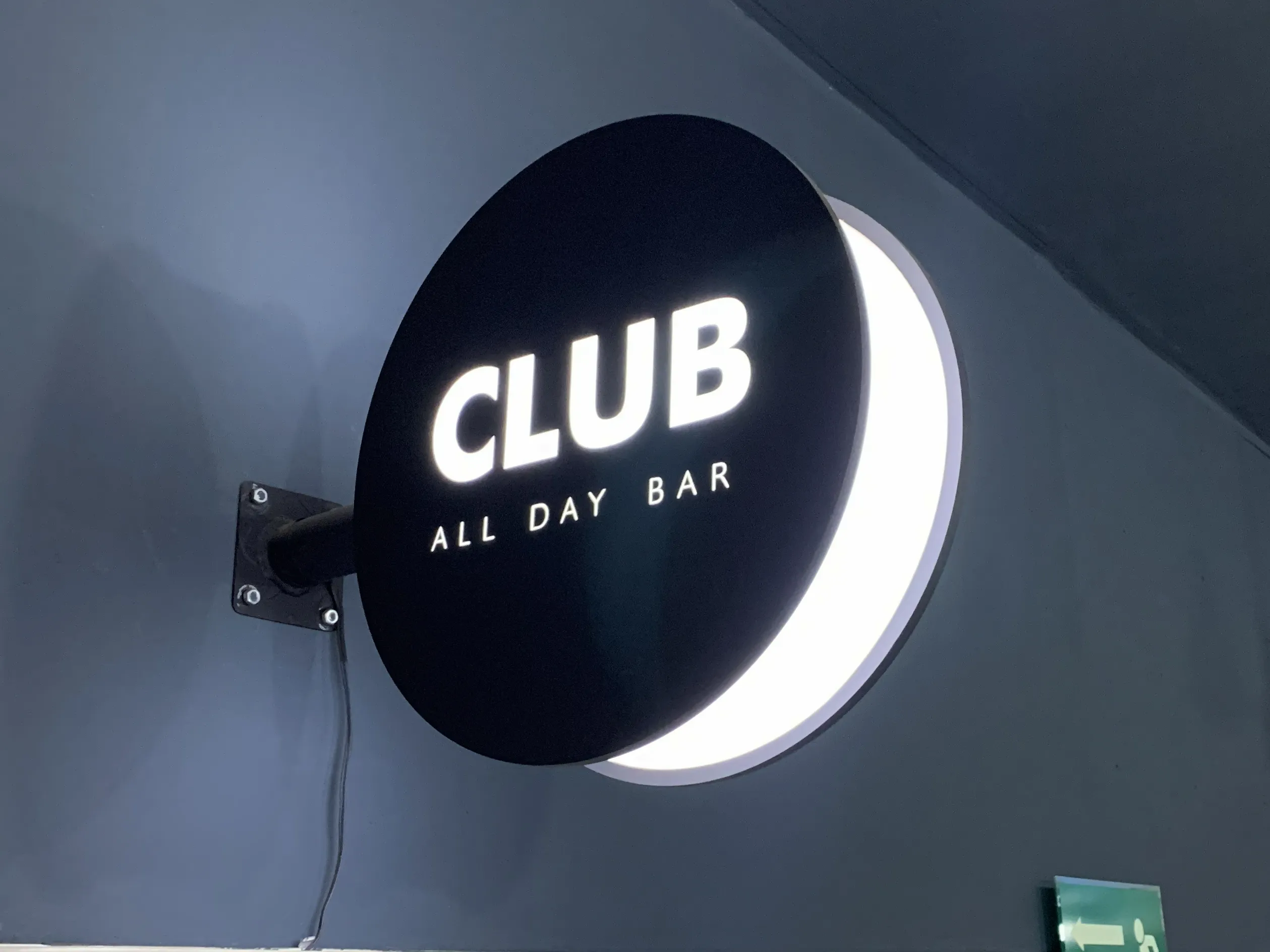
A cabinet sign — also called a lightbox sign or box sign — is a flat, illuminated enclosure mounted to the exterior wall of a business. The face is typically translucent acrylic with your branding applied, and the interior is lit with LED modules that make the sign visible day and night.
Cabinet signs are one of the most common storefront signs in Ottawa for a simple reason: they work. They are visible from a distance, they hold up in Canadian winters, and they can display complex logos and graphics that individual channel letters cannot.
They come in two main configurations:
Single-face — lit from one side. Used when the sign is mounted flat against a wall and viewed from the front only.
Double-face — lit from both sides. Used for signs that project outward from a wall or are freestanding, so they are visible from multiple directions.
The right configuration depends on your building position relative to traffic — something a professional site assessment determines before any design work begins.
→ Learn more about LED cabinet signs in Ottawa
Phase 1 — The Site Assessment: Why It Matters More Than You Think
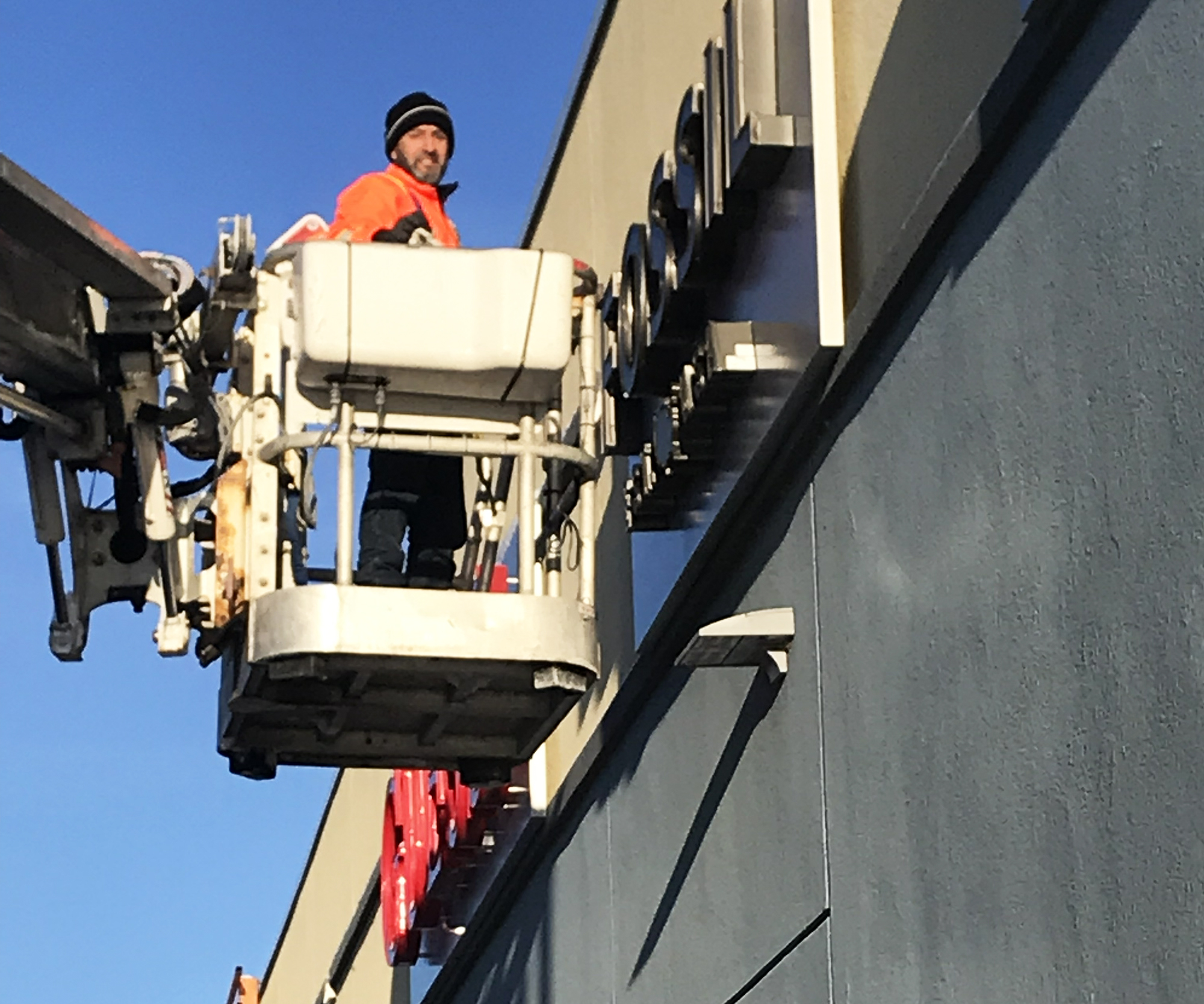
Before a single drawing is made, a professional sign company sends someone to your location. This is not a formality — it is one of the most critical steps in the entire process.
Here is what a proper site assessment covers:
Your building wall type
Ottawa commercial buildings are constructed in several ways — brick, EIFS (the stucco-like exterior insulation finish), aluminum composite panels (ACM), or concrete block. Each wall type requires a completely different approach to fastening a sign securely. A professional identifies your wall type immediately and plans accordingly — preventing damage to your building and ensuring the sign stays up.
Where the electrical source is
A cabinet sign needs power. The site assessment locates the nearest source, assesses whether a new conduit run is needed, and confirms access points. Surprises on installation day — like no accessible circuit near the sign location — are expensive and entirely avoidable.
Sign size and zoning limits
Your permitted maximum sign area is determined by the City of Ottawa zoning designation for your property. The site assessment includes a zoning check to confirm how large your sign can legally be before any design begins. A sign that exceeds permitted area requires a minor variance — adding significant time and cost.
Sight lines and optimal placement
Where exactly the sign should be positioned on your facade for maximum visibility — accounting for trees, neighbouring signs, overhead obstructions, and viewing angles from the street.
Ask any sign company you are considering: “Do you visit the location before quoting?” A quote based on photos alone cannot account for wall type, electrical access, or zoning limits. If the answer is no — that is a red flag.
Phase 2 — Design and the Ottawa Sign Permit
Once the site is assessed, design begins. But in Ottawa, fabrication cannot start until a sign permit is issued by the City — and getting that permit requires a complete, properly prepared application.
For cabinet signs specifically, the City of Ottawa requires scaled technical drawings, electrical specifications including CSA certification of all components, written landlord consent if you are a tenant, and the completed Building Permit Application form.
The detail that catches many business owners off guard: the electrical component triggers a more involved review. Because cabinet signs are illuminated, all internal electrical components must meet Canadian Standards Association (CSA) certification. A sign built with uncertified components can fail inspection even after installation.
Typical permit approval timeline in Ottawa: 4 to 6 weeks from a complete submission.
The most common mistake Ottawa business owners make: contacting a sign company two weeks before their opening date. The permit alone takes 4 to 6 weeks. Start your sign project at least 8 to 10 weeks before you need it.
→ Full guide to Ottawa sign permits
Phase 3 — Fabrication: What Goes Into Building a Cabinet Sign
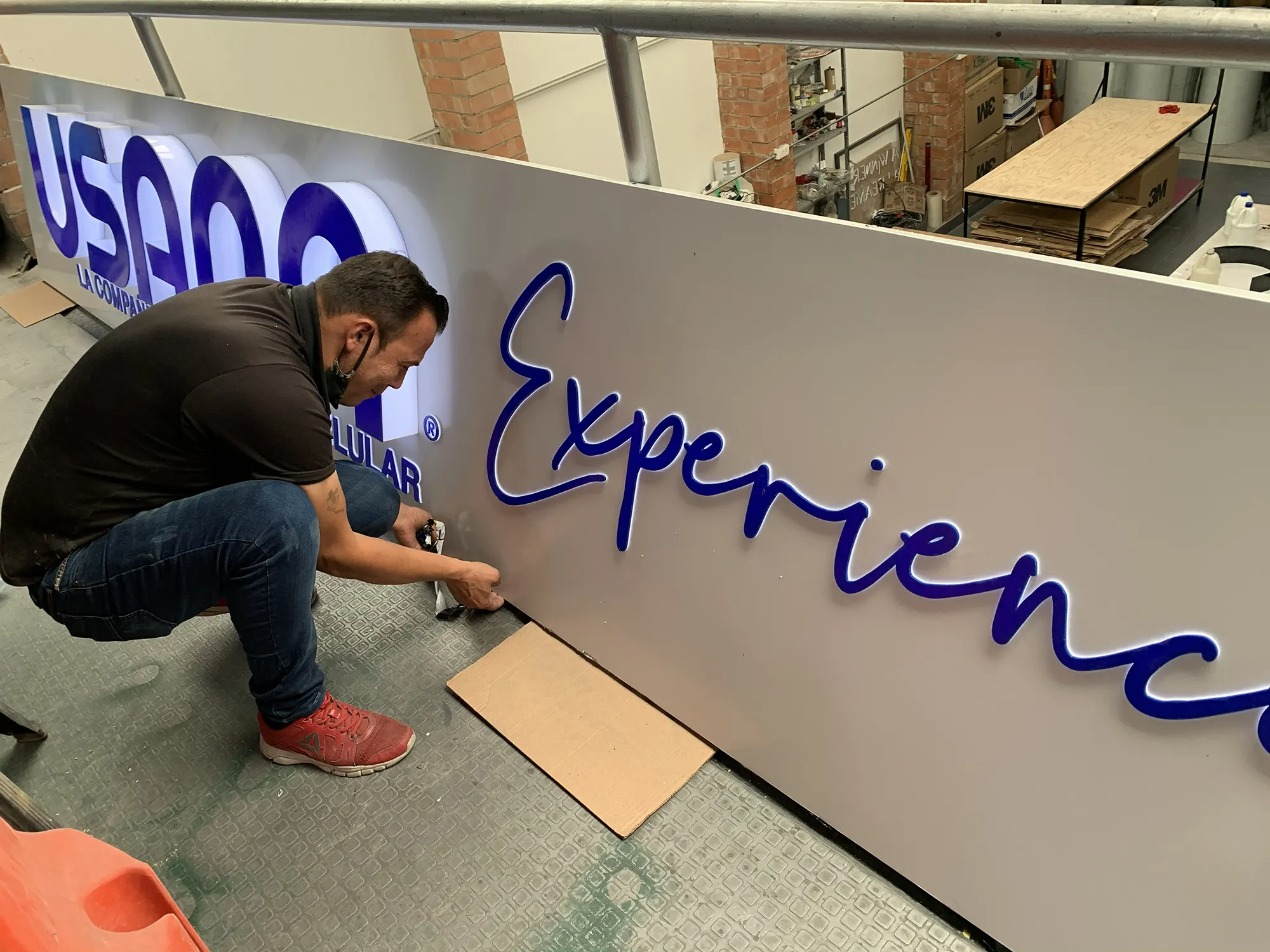
While the permit is being processed, fabrication happens in parallel. For Ottawa businesses, where your sign is built matters as much as how it is built. A sign assembled with no local quality control is a different product than one built in an Ottawa facility by a team that installs in Ottawa winters every week.
Here is what separates a quality cabinet sign from a cheap one — and what to look for when evaluating a sign company:
The cabinet frame
Quality cabinets use extruded aluminum — a material that handles Ottawa temperature swings without warping, rusting, or degrading over years of freeze-thaw cycles.
The sign face
The translucent face must be UV-stabilized acrylic for Ottawa outdoor environments. Non-UV-stabilized acrylic yellows and becomes brittle, changing your sign colour and eventually cracking.
The LED driver — where corners are most easily cut
The LED driver must be rated for Ottawa winters. Ottawa regularly reaches -30 to -40 Celsius. A driver not rated for those temperatures will fail — often in the first winter. Ask specifically: what is the operating temperature rating of the driver? If you do not get a specific answer, be concerned.
Weatherproofing details
A properly built cabinet sign includes small drainage openings at the bottom of the cabinet. In Ottawa climate, temperature changes cause condensation inside the cabinet. Without this drainage, moisture accumulates, corrodes the LED components, and dramatically shortens the sign life. It is a small detail that separates a properly built sign from a cheaply assembled one.
Phase 4 — Installation Day: What Actually Happens
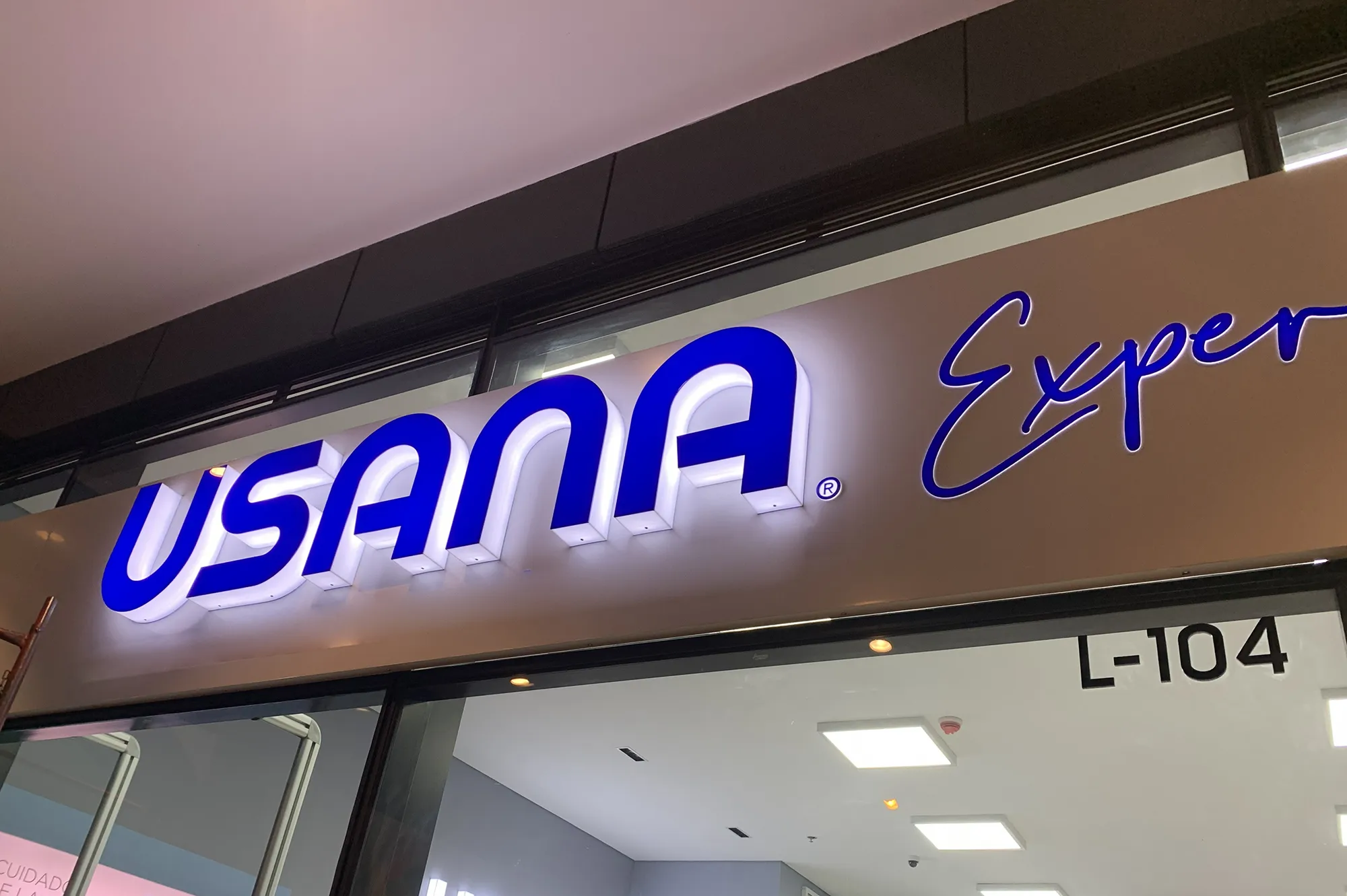
Installation day is when everything comes together — and when the difference between an experienced installer and an inexperienced one becomes visible.
Before anything goes on the wall, the installation team confirms the permit approval is in writing, verifies electrical access, and checks that equipment access is clear. Installing before written permit approval is a by-law violation in Ottawa regardless of how confident anyone is about the outcome.
Wall fastening — the most critical decision of the installation
How a cabinet sign is anchored depends entirely on what your building is made of. On brick and concrete, the fastening method differs completely from an EIFS wall — the stucco-like exterior insulation finish common on many Ottawa commercial buildings built after the 1990s. EIFS is an insulation system, not a structural wall. Driving standard anchors through it damages the insulation and creates water infiltration points. Proper EIFS installation requires a completely different approach — and this is one of the most common errors made by inexperienced sign companies.
Ask before you hire: “What type of wall does my building have, and how do you fasten to it?” If they cannot answer without looking it up — or say it does not matter — that is a significant red flag.
The electrical connection
In Ontario, the final electrical connection of an illuminated sign must be completed by a licensed electrician under the Electrical Safety Authority (ESA) requirements. This is not optional. A sign company that connects the electrical without a licensed electrician is exposing you to liability. Always confirm this is included in your installation quote.
Weatherproof sealing
Every penetration through your building exterior — every anchor point, every conduit entry — must be sealed to prevent water from entering your wall over years of Ottawa winters. Skipping this step or doing it poorly leads to wall damage that costs far more to repair than the sign itself.
How Ottawa Climate Affects Cabinet Sign Installation

Ottawa is one of the harshest climates for outdoor signage in Canada. The city regularly swings from -40 Celsius in winter to +35 Celsius in summer — a 75-degree range that every component of your sign must handle without failure year after year.
Ottawa shoulder seasons bring repeated freeze-thaw cycles that stress every penetration in a building exterior. A sign installed without proper weatherproofing will allow water to enter wall penetrations, freeze, expand, and gradually damage both the sign mounting and the building wall behind it.
When reviewing a quote from an Ottawa sign company, ask specifically:
- What is the operating temperature rating of the LED driver?
- Are the LED modules rated for outdoor use in Canadian climate?
- What sealant products do you use and what temperature range are they rated for?
These questions separate companies that are serious about Ottawa installations from those who import generic components and hope for the best.
How Long Does the Full Process Take in Ottawa?
One of the most common questions we hear: “How quickly can I have my sign?” Here is an honest timeline based on real Ottawa projects:
| Phase | Typical Timeline |
|---|---|
| Site assessment | 1–3 days after first contact |
| Design and technical drawings | 3–5 business days |
| Permit application submission | Within 1 week of design approval |
| City of Ottawa permit approval | 4–6 weeks |
| Fabrication (parallel to permit) | 2–3 weeks |
| Installation day | 4–8 hours on site |
| Total: first contact to lit sign | 7–10 weeks |
Opening a new Ottawa location? Start your sign project at least 8 to 10 weeks before your target opening date. Business owners who contact us 2 weeks before opening almost never have their exterior sign ready on time.
5 Questions to Ask Before Hiring an Ottawa Cabinet Sign Company
Based on everything in this guide, these are the five questions that separate a professional Ottawa sign company from one that cuts corners:
1. Do you visit the location before quoting?
A quote based on photos alone cannot account for wall type, electrical access, or zoning limits. A site visit is non-negotiable.
2. Do you manage the City of Ottawa permit?
Permit management should be included in a full-service quote — not an add-on or something you handle yourself.
3. What is the operating temperature rating of your LED drivers?
For Ottawa installations, -40 Celsius is the minimum acceptable. Any vague answer is a red flag.
4. Is the electrical connection done by a licensed electrician?
In Ontario this is required by law under ESA requirements. Confirm it is included — not something you arrange separately.
5. Do you fabricate locally or import the sign?
Local fabrication means tighter quality control, faster turnaround, and a team accountable locally — especially important for Ottawa climate.
FAQ — Cabinet Sign Installation in Ottawa
One team. Start to finish.
Skip the Guesswork —
We Handle Everything
DSign LED manages the complete cabinet sign process — site assessment, design, City of Ottawa permit, local fabrication, and professional installation by our certified team. One call. One team. One invoice.
Ottawa · Kanata · Nepean · Orleans · Barrhaven · Stittsville · Gatineau